
What Is a DOTS Calculator?
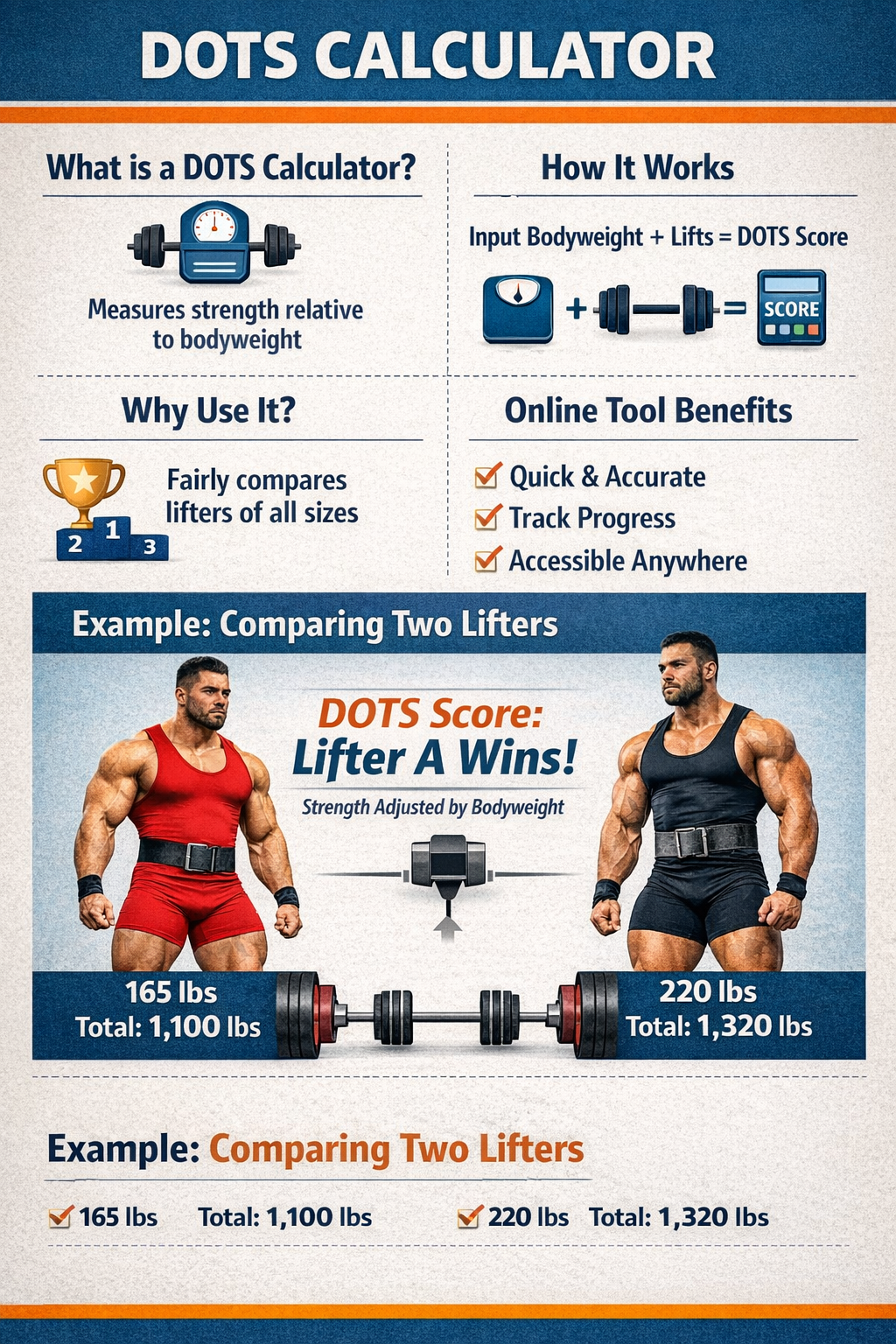
A DOTS calculator is a specialized tool used in powerlifting to measure an athlete’s overall strength performance relative to their bodyweight. Instead of simply comparing the total weight lifted, this system generates a powerlifting strength score that allows lifters of different sizes to be evaluated on a level playing field. Whether you’re a beginner or a competitive athlete, this metric helps you understand how strong you really are compared to others.
How the DOTS Calculator Works
The DOTS formula takes into account two key inputs: your bodyweight and your total lifts (the combined weight of your squat, bench press, and deadlift). Once you enter these values into the online tool, it applies a mathematical formula designed to normalize results across different weight classes.
Here’s how it works step by step:
- Enter your bodyweight (in kilograms or pounds).
- Input your best squat, bench press, and deadlift numbers.
- The calculator sums your lifts and applies the DOTS coefficient formula.
- You receive a final score that reflects your relative strength.
This process makes it easy to compare lifts by bodyweight, ensuring that lighter and heavier athletes can be evaluated fairly.
Why Powerlifters Use the DOTS System
Powerlifters rely on the DOTS calculator for several important reasons. In competitions, it helps determine rankings across different weight classes, especially in meets where overall “best lifter” awards are given. Instead of favoring heavier lifters who can lift more absolute weight, the DOTS system rewards efficiency and strength relative to body size.
It’s also widely used in training. Athletes track their DOTS score over time to measure progress, even if their bodyweight changes. This makes it a powerful tool for:
- Monitoring strength development
- Setting realistic performance goals
- Comparing results with other lifters worldwide
Benefits of Using an Online DOTS Calculator
Using a DOTS calculator online tool offers convenience and accuracy. You don’t need to manually calculate complex formulas—everything is automated and instant. Key benefits include:
- Quick and precise strength scoring
- Easy tracking of progress over time
- Accessibility from any device
- Ideal for both casual lifters and competitive athletes
For coaches and fitness enthusiasts, it’s an efficient way to evaluate performance without needing advanced spreadsheets or calculations.
Example: Comparing Two Lifters
Imagine two lifters:
- Lifter A weighs 75 kg and totals 500 kg.
- Lifter B weighs 100 kg and totals 600 kg.
At first glance, Lifter B appears stronger due to a higher total. However, when you use a DOTS calculator, Lifter A may achieve a higher powerlifting strength score because they lift more relative to their bodyweight. This highlights the importance of using a standardized method to compare lifts by bodyweight fairly.
By using a DOTS calculator, you gain a deeper, more accurate understanding of strength—making it an essential tool for anyone serious about powerlifting.